

Quick Exploration of Instant Funding
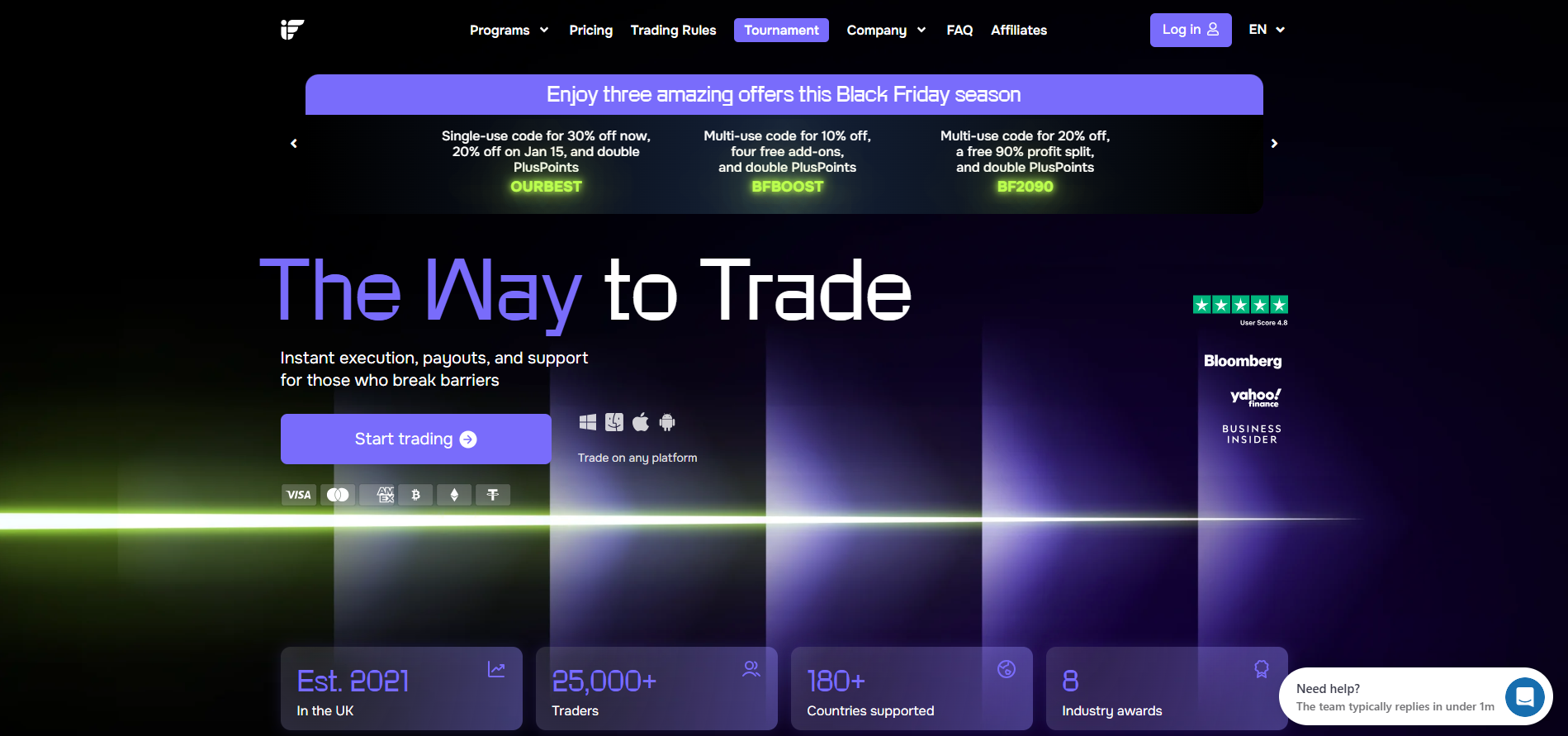
Why Instant Funding has become one of the first platforms chosen by traders when participating in challenges
I. Introduction to Instant Funding (IF):
Instant Funding (IF) is a capital support program for traders with flexible conditions, unlike traditional funding programs. With IF, traders can access large capital immediately without going through many complex challenge rounds. This allows traders to quickly increase their profit-making opportunities and practice risk management skills in a live trading environment.
IF offers an optimal solution for experienced traders who lack capital. Instead of having to go through the rigorous evaluation processes of traditional funds, IF helps traders save time and quickly get started with real capital. However, to achieve effectiveness, traders must strictly adhere to the risk management rules set by the fund.
II. Types of Trading Accounts:
2.1. Instant Funding Account:
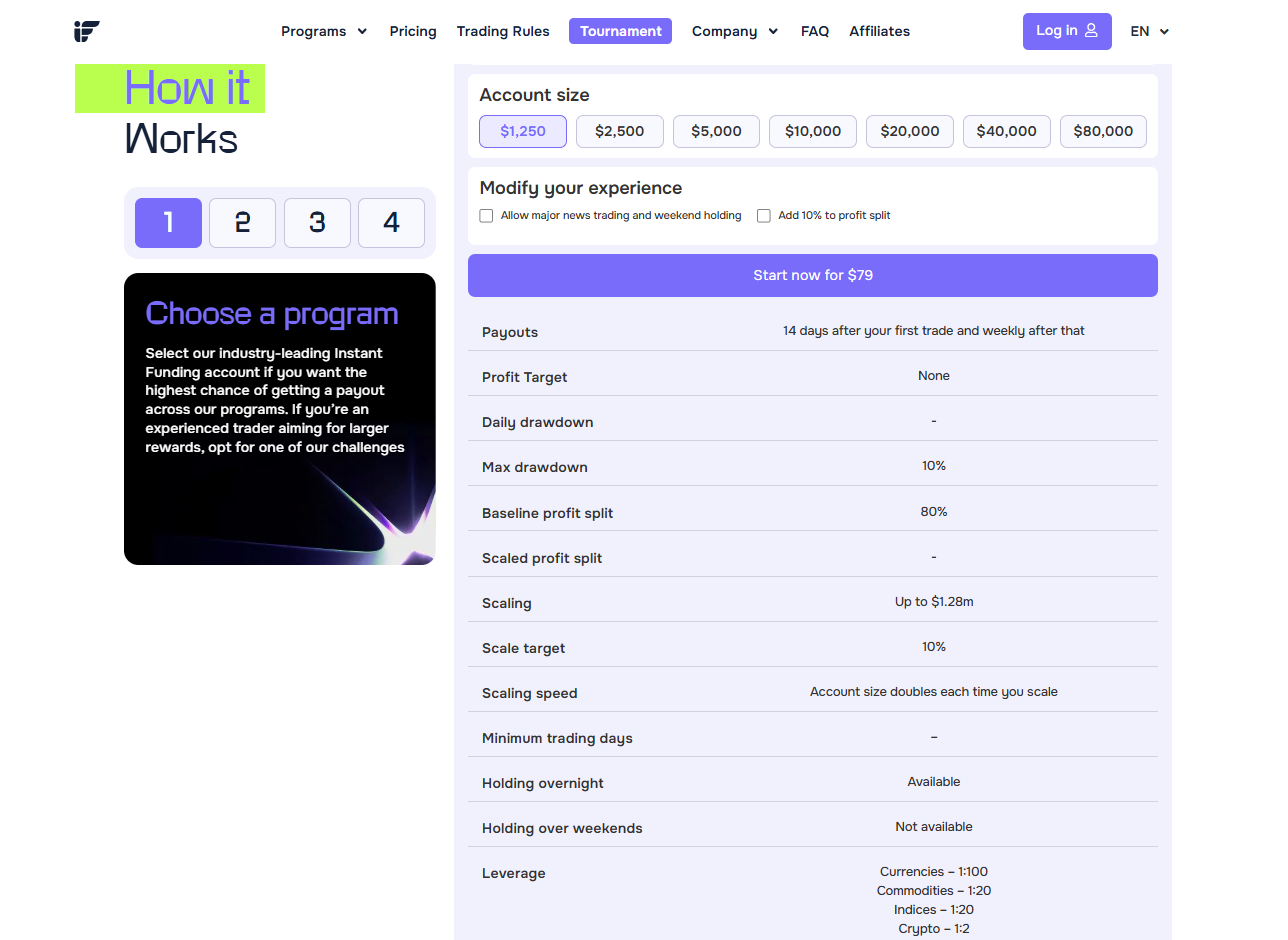
Traders are funded immediately upon completing registration. A prominent feature of this account type is that it does not require traders to pass initial challenge rounds. However, during the trading process, traders must comply with risk management rules and ensure minimum profit levels. This evaluation process usually takes place within a few weeks to determine the trader’s ability.
Evaluation Levels of the Instant Funding Account:
– Level 1: After registration, the trader is funded and begins trading. During this phase, traders need to adhere to risk management rules such as drawdown limits and trading volume. This helps the fund monitor the trader’s trading ability and control risk.
– Level 2: After a short period, the fund will evaluate trading performance based on the trader’s ability to manage capital and maintain stable profits. Traders who demonstrate stability and discipline in trading will have the opportunity to increase their allocated capital.
– Level 3: Traders need to continue to comply with trading rules for a long time to be considered for a capital limit increase. Consistency and risk control ability will be important factors in deciding to increase capital.
2.2. One-Phase Account:
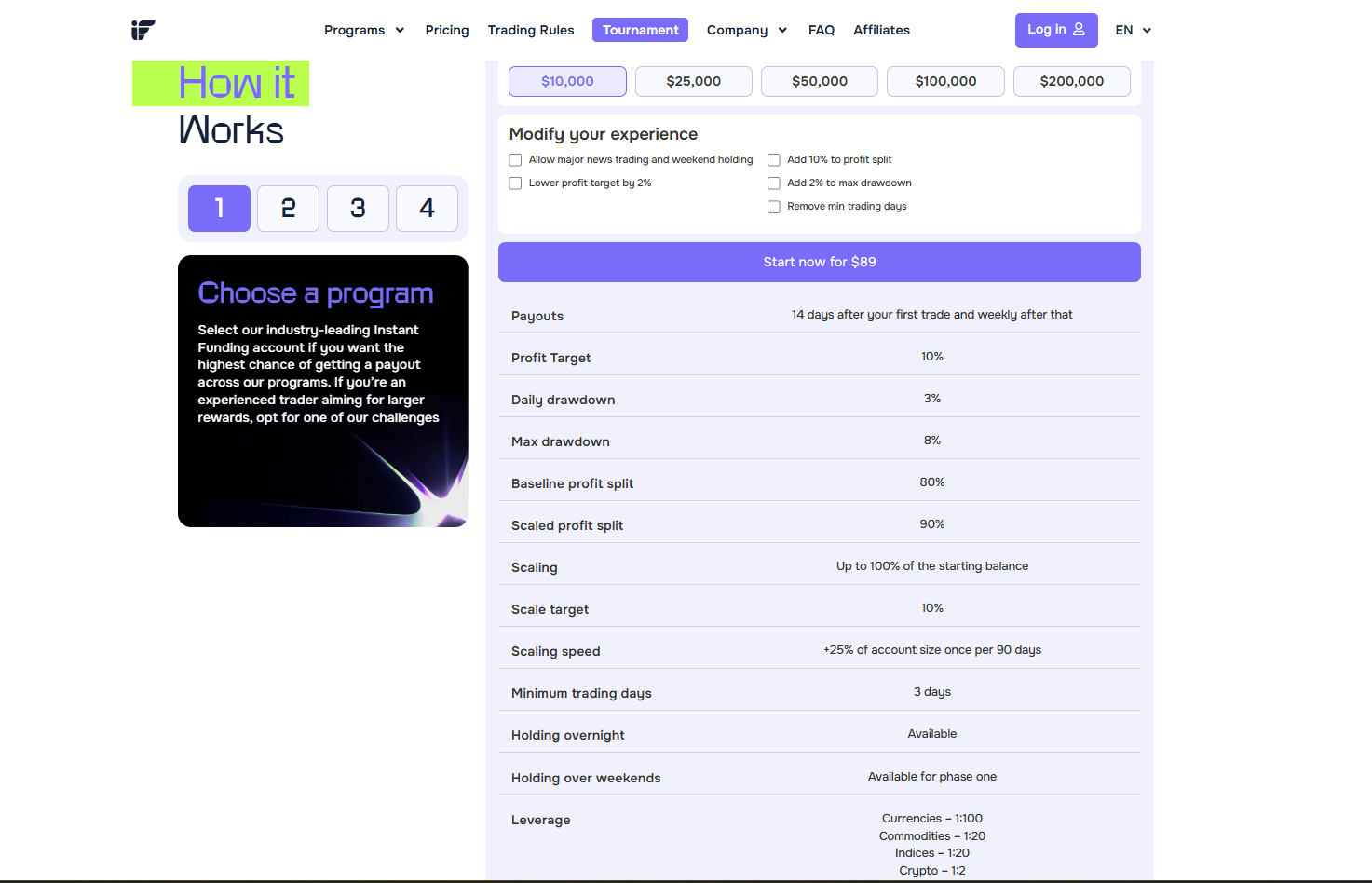
This account type requires traders to pass a single evaluation phase. During this phase, traders must achieve a specific profit target while adhering to drawdown limits. The evaluation period typically lasts 30 to 60 days, focusing on assessing the trader’s ability to maintain consistent profitability.
One-Phase Account Evaluation Phase:
Traders will be required to achieve a certain profit target (for example, 10-15%) within the specified time frame without exceeding the maximum drawdown limit. Trading volume, holding time, and capital management rules will be closely monitored. Upon meeting these requirements, traders will be granted official capital to begin trading with a live account.
2.3. Two-Phase Account:
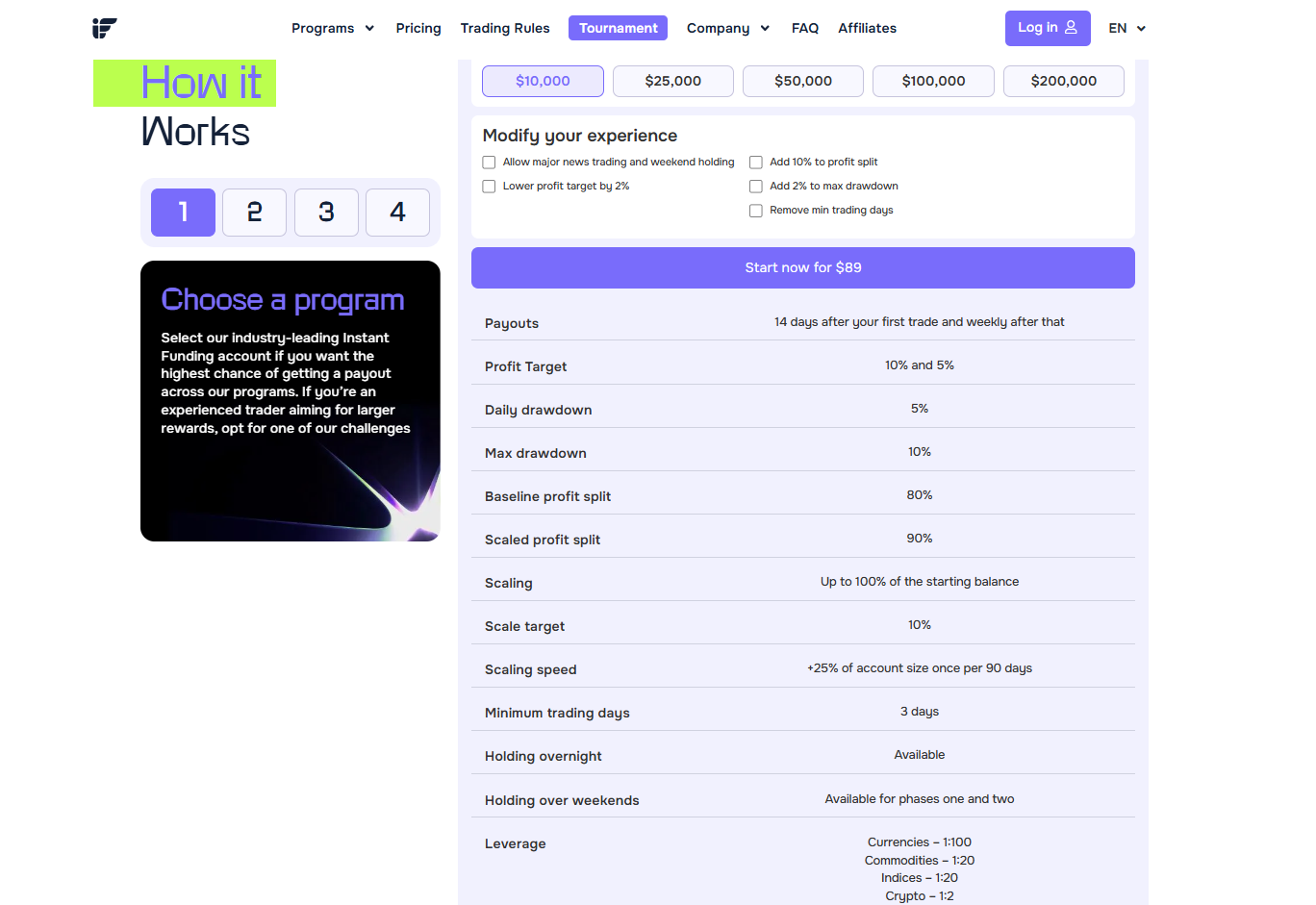
This account type is suitable for traders who want to demonstrate their trading ability through two challenging phases. Each phase has specific requirements for profit and risk management, allowing the fund to assess the trader’s stability and capital management skills.
Two-Phase Account Evaluation Phases:
Phase 1: Traders need to achieve a certain level of profit (for example, 8-10%) within 30 days without violating the drawdown rules. This phase tests the trader’s risk management ability and flexibility in trading.
Phase 2: After passing phase 1, traders proceed to phase 2 with a lower profit requirement (for example, 5%) but extended for 60 to 90 days. Here, traders must maintain stable performance and strictly adhere to trading rules. If successful, traders will be provided with real capital to begin the official trading process.
2.4. Three-Phase Account:
This account type requires traders to pass three evaluation phases, suitable for professional traders who want to demonstrate persistence and long-term trading ability. In return, the capital allocated to this account will be higher, creating greater opportunities for traders.
Three-Phase Account Evaluation Phases:
Phase 1: Traders need to achieve a specific profit level (higher than the Two-Phase account) within 20 to 30 days. Drawdown limits and risk management rules will be closely monitored.
Phase 2: Profit requirements are reduced, but the testing period is extended to approximately 60 days. The goal of this phase is to test the trader’s consistency and risk control ability in trading
Phase 3: This is the final challenge phase, lasting from 90 to 120 days. Traders need to demonstrate consistency and discipline throughout the trading process. Upon completion, traders will receive higher capital to engage in real trading.
III. Funding Process:
The funding process varies for each account type but generally involves these key steps:
Step 1: Register for an account and select the capital allocation that aligns with your personal trading objectives.
Step 2: Execute trades in accordance with the rules of each account type, ensuring adherence to capital management requirements and account drawdown limits.
Step 3: Upon successfully navigating the challenges, traders will receive real capital to commence live trading. Throughout this process, traders must continue to comply with trading rules and risk management protocols to preserve their capital.
IV. Withdrawal Policy:
Withdrawal policies differ depending on the account type. Traders should familiarize themselves with the specific regulations regarding withdrawal frequency, minimum amounts, and payment methods before initiating a withdrawal request. Specifically:
Withdrawal Frequency: Traders can typically withdraw funds periodically, often weekly or monthly. This offers flexibility in managing profits.
Profit Requirements: Traders are usually required to achieve a minimum profit threshold before becoming eligible for withdrawals. This threshold varies based on the specific fund’s regulations.
KYC and Identity Verification: Funds commonly mandate traders to complete Know Your Customer (KYC) procedures before processing withdrawal requests. This measure ensures security and compliance with anti-money laundering regulations.
V.Important Considerations:
Risk Management: Adhering to risk management rules is imperative. Traders must diligently monitor their account drawdowns and avoid violating regulations that could lead to the revocation of funding.
Practical Experience: Numerous traders have shared insights into circumventing common pitfalls such as overtrading and deviating from trading plans. Aspiring traders should learn from these real-world experiences to enhance their capital management skills.
Prohibited Activities: Certain funds impose restrictions, such as prohibiting trading during major news releases or engaging in excessively high-volume trading. Traders must thoroughly review these terms to avoid violations.
VI.Conclusion:
Participating in Instant Funding (IF) opens up opportunities for traders to access capital quickly. However, to succeed, traders need to thoroughly understand trading rules and risk management, as well as prepare mentally for the challenges. Each account type offers different benefits but requires patience, discipline, and trading skills from the trader.