
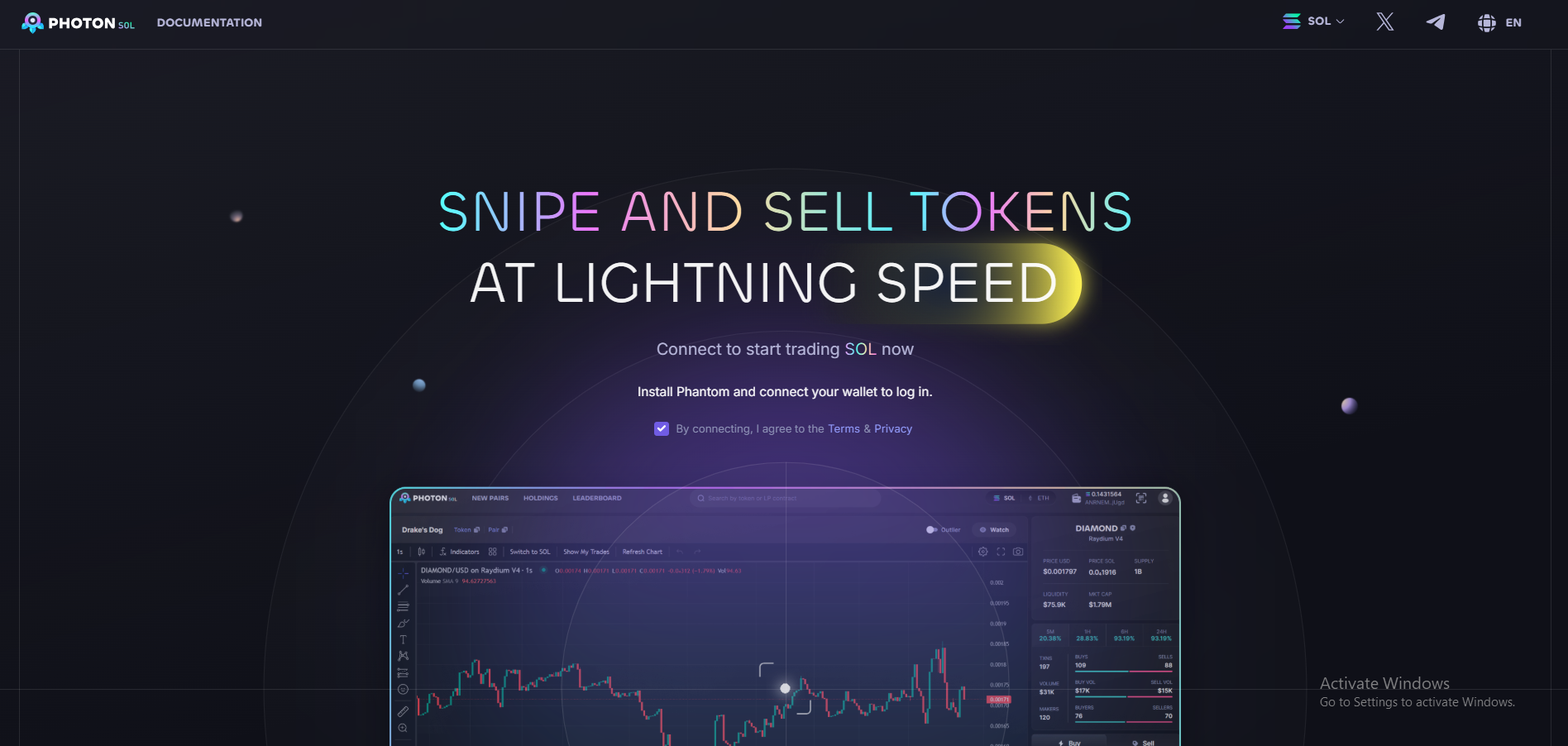
Photon SOL: An Overview of the Decentralized Web3 Cryptocurrency Project
Photon SOL is a Web3-based decentralized cryptocurrency and token that operates on the Solana blockchain, leveraging the fast, low-cost, and scalable capabilities of Solana’s network. The project is designed to enable a new generation of decentralized applications (dApps), focusing on the growth of DeFi (Decentralized Finance), NFTs (Non-Fungible Tokens), and DAO (Decentralized Autonomous Organizations) use cases, all underpinned by the speed and efficiency of Solana’s ecosystem.
This article provides an in-depth look at Photon SOL, its features, potential use cases, and the opportunities and challenges that come with being part of the rapidly growing Solana ecosystem.
1. What is Photon SOL?
Photon SOL is a cryptocurrency token that exists within the Solana blockchain ecosystem. It serves multiple purposes within decentralized applications and platforms, including its use in staking, transaction fees, governance decisions, and as a utility token in Web3 projects.
The name “Photon” invokes the idea of speed and efficiency—traits that are emblematic of the Solana blockchain, known for its high throughput and low-latency transactions. By operating on Solana, Photon SOL can handle a high volume of transactions per second (TPS), which makes it ideal for applications requiring fast and inexpensive transactions.
Photon SOL seeks to provide users with a decentralized environment to participate in staking, governance, and trading activities while benefiting from the low fees and rapid processing times that Solana provides.
2. Key Features and Benefits of Photon SOL
2.1. Speed and Scalability (Solana Blockchain Integration)
One of the main advantages of Photon SOL is its integration with the Solana blockchain, which boasts impressive speed and scalability. Solana’s unique consensus mechanism, Proof of History (PoH), allows the network to process thousands of transactions per second, significantly reducing transaction fees compared to other blockchains like Ethereum.
- Key Feature: Solana’s ability to handle over 50,000 transactions per second (TPS) without sacrificing decentralization.
- Benefit: Photon SOL can be used in high-volume, fast-paced dApps where speed and low fees are crucial, such as in trading platforms, games, and DeFi protocols.
2.2. Low Transaction Fees
With Photon SOL being native to Solana, transactions on its network are extremely cheap compared to other blockchains, especially Ethereum. For instance, Solana’s fees typically range from a fraction of a cent to a few cents per transaction, which makes Photon SOL ideal for micro-transactions, gaming economies, and applications requiring frequent interactions.
- Key Feature: Extremely low transaction costs.
- Benefit: Users can send and receive transactions, stake, or interact with dApps without being burdened by high network fees, which is often an issue on Ethereum and Bitcoin.
2.3. Governance and Staking Opportunities
Like many tokens in the Web3 ecosystem, Photon SOL provides staking and governance features. Token holders can participate in staking by locking up their tokens to help secure the network and earn rewards in the form of additional tokens. This incentivizes users to hold and stake their Photon SOL rather than just trading it.
Additionally, Photon SOL allows users to take part in governance decisions within decentralized platforms or dApps built on the Solana blockchain. Token holders can vote on proposals related to the direction of projects, changes in protocol rules, and upgrades within the ecosystem.
- Key Features:
- Staking: Users can earn rewards by staking their tokens on the Solana network.
- Governance: Token holders can propose and vote on important decisions.
- Benefit: Users gain a voice in the development of the Photon SOL ecosystem and a financial incentive for staking.
2.4. Web3 and NFT Ecosystem
Photon SOL is designed to play a pivotal role in the rapidly expanding Web3 ecosystem. It facilitates the use of NFTs and other decentralized applications. The low-cost, high-speed nature of Solana’s blockchain makes it an excellent fit for creating and trading NFTs.
- Key Feature: Integration with Solana’s thriving NFT ecosystem.
- Benefit: Photon SOL can be used for minting, buying, selling, and trading NFTs, making it attractive for creators, collectors, and artists in the Web3 space.
2.5. DeFi and Liquidity Pools
Photon SOL is also geared towards use in DeFi (Decentralized Finance) protocols on the Solana blockchain. These include lending, borrowing, yield farming, liquidity pools, and decentralized exchanges (DEXs). Photon SOL holders can provide liquidity, participate in farming, or engage in DeFi governance decisions.
- Key Feature: Compatibility with DeFi protocols on Solana.
- Benefit: Offers users the chance to earn passive income by staking or lending Photon SOL within decentralized financial systems, which are becoming an increasingly popular alternative to traditional finance.
3. Photon SOL Use Cases
3.1. Transaction and Fee Payments
Due to its low transaction cost and quick execution, Photon SOL is an ideal currency for transactional purposes within the Solana ecosystem. Whether you’re interacting with decentralized exchanges (DEXs), using dApps, or transferring assets, Photon SOL can serve as a currency for payments without the burden of high fees.
3.2. Staking and Yield Farming
Photon SOL token holders can participate in staking and yield farming within the Solana ecosystem. By locking their tokens in a decentralized liquidity pool, they can earn additional Photon SOL as rewards. This incentivizes long-term holding and active participation in the network.
- Key Feature: Staking rewards in DeFi protocols.
- Benefit: Token holders can benefit from passive income while helping secure and decentralize the Solana network.
3.3. Governance Participation
In Web3 platforms and DAO-driven projects, Photon SOL can be used as a governance token, allowing holders to participate in decision-making processes. This allows users to vote on key protocol upgrades, funding allocations, and other crucial changes within the ecosystem.
3.4. Gaming and Metaverse Integration
Photon SOL has a significant role in the growing metaverse and gaming sectors. With the increasing adoption of play-to-earn (P2E) games and virtual worlds, Photon SOL can act as an in-game currency for trading, buying assets, and earning rewards. Its low fees and fast transaction speeds make it well-suited for these real-time environments.
- Key Feature: Use in virtual economies.
- Benefit: Photon SOL enables gamers and users to interact within a virtual environment seamlessly, facilitating in-game transactions and purchases.
4. Potential Risks and Challenges
4.1. Market Volatility
As with most cryptocurrencies, Photon SOL is subject to market volatility. The value of the token can fluctuate based on market conditions, news, and sentiment within the broader crypto ecosystem. This volatility is particularly noticeable with smaller and newer projects.
4.2. Competition from Other Solana-based Tokens
The Solana blockchain is home to numerous other tokens, many of which are designed to fulfill similar use cases. Photon SOL faces competition from other tokens in the ecosystem that are also targeting DeFi, NFT, and Web3 applications. The project’s ability to differentiate itself and gain adoption within a crowded space will determine its long-term success.
4.3. Adoption and Ecosystem Growth
For any Web3 project to succeed, it requires widespread adoption. Photon SOL’s success depends on the growth of its ecosystem, including developers building decentralized applications and the active participation of users. If the Solana blockchain doesn’t continue to grow in terms of developers and user base, Photon SOL may struggle to achieve critical mass.
5. How to Acquire and Use Photon SOL
Photon SOL can typically be acquired through cryptocurrency exchanges that support Solana-based tokens. These exchanges may include:
- Centralized Exchanges (e.g., Binance, Kraken, etc.)
- Decentralized Exchanges (DEXs) (e.g., Serum, Raydium, etc.)
Once acquired, Photon SOL can be stored in a Solana-compatible wallet like Phantom, Sollet, or Solflare.
To participate in staking, governance, or other ecosystem activities, users would need to use their Photon SOL on the respective platforms within the Solana ecosystem.
6. Conclusion
Photon SOL is an exciting token within the Solana blockchain ecosystem, with vast potential for use in decentralized finance, Web3 applications, NFTs, and more. Its core advantages, such as low transaction costs, speed, and scalability, make it an attractive choice for those looking to engage in these rapidly growing sectors. However, like any cryptocurrency, it faces challenges such as market volatility and competition from other tokens within the Solana ecosystem.
As the Solana blockchain continues to mature and expand, Photon SOL has the potential to play an important role in the broader crypto ecosystem. Its ability to attract developers, users, and liquidity will determine its long-term viability, but for now, it remains an exciting player in the Web3 and decentralized finance spaces.
-> Learn More Trading Bot : https://rvicenter.com/category/financial/trading-bot/